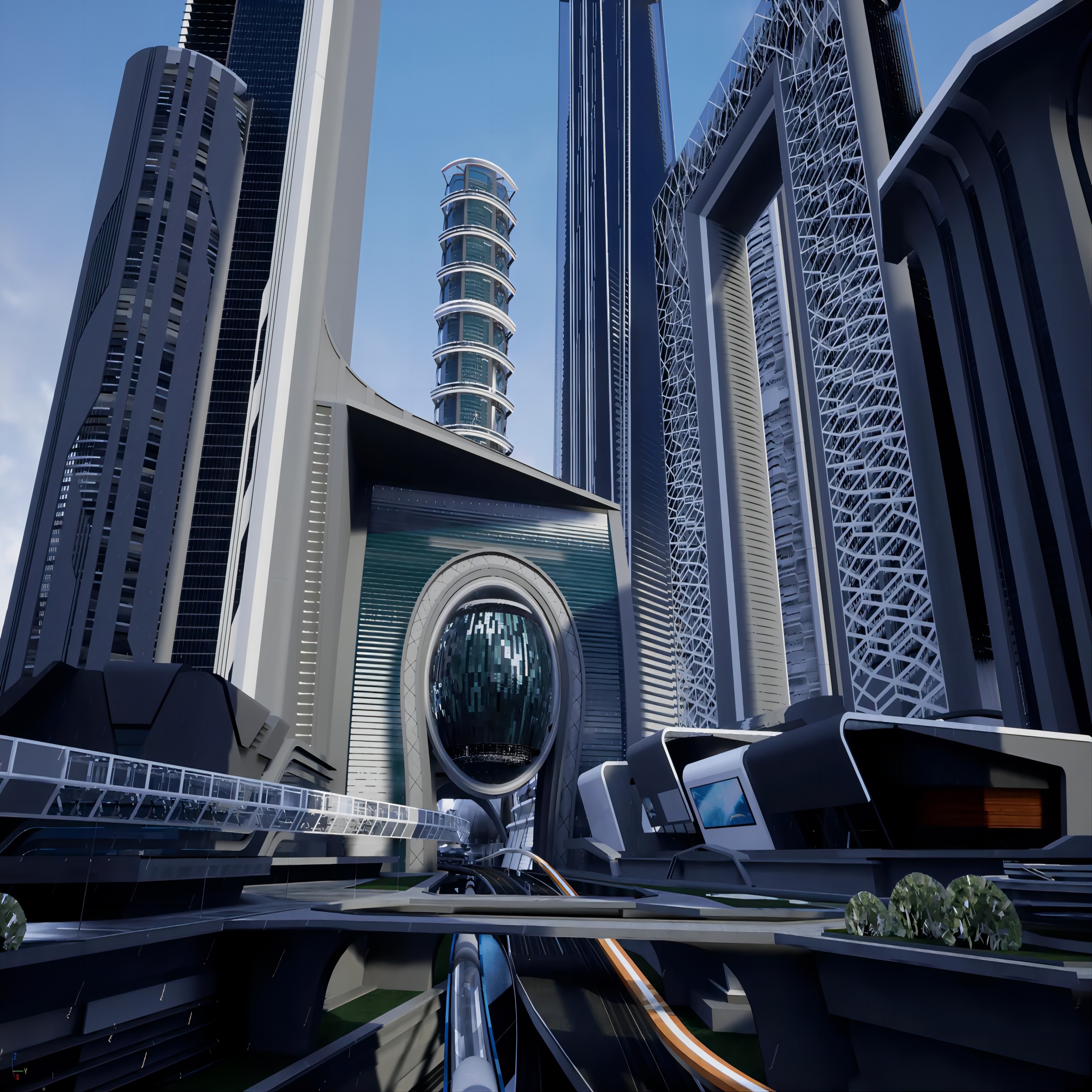
Virtual reality rendering refers to the process of transforming a virtual reality scene into a two-dimensional image or video. Through computer graphics technology, the models, lighting, materials, etc. in the virtual scene are calculated and processed according to set parameters, and finally form a realistic visual effect.This process involves a large number of computing and graphics processing techniques, such as ray tracing, shadow calculation, reflection and refraction, to ensure that the generated image accurately represents the designer's intentions.By rendering, flat images or animations can be given a more realistic appearance, allowing users to experience satisfying visual effects. In today's architectural design, sustainability is becoming increasingly important, and advanced rendering technologies can not only present architectural aesthetics, but also help designers predict the energy efficiency and environmental impact of buildings.

At present, virtual reality rendering technology is developing rapidly, promoting the progress of the virtual reality industry.Virtual reality rendering technology enables users to immerse themselves in the virtual world and experience a high degree of realism and interactivity by creating and rendering virtual environments in real time.The development of virtual reality technology can be traced back to the 1980s and was originally used in the military and aviation fields.With the advancement of technology, virtual reality has gradually expanded into fields such as business, medical care and education.In recent years, global VR terminal shipments have continued to grow and technological progress has been significant, especially important breakthroughs have been made in core chips, display screens, optical solutions and interactive technologies.For example:Pancake optical solutions have attracted attention because of their thin and light design, and Micro OLED and Micro LED display technologies have also been favored by major manufacturers for their high resolution and low latency characteristics.

Virtual reality rendering has a very broad application prospect in architectural design, and it will bring a complete experience revolution to architectural design. Through virtual reality technology, customers can "walk into" unfinished buildings and experience every corner of the design firsthand. This immersive experience will greatly enhance customers 'sense of participation and satisfaction. The application of virtual reality rendering in architectural design is mainly reflected in the following aspects:
1. Model visualization and space experience: Designers can convert design files such as floor plans and 3D models into VR scenes. Users can experience the space of future buildings immersively and better understand the planning and layout of the building. Space proportions and overall effect.
2. Real-time interaction and modification: In a virtual environment, designers can modify architectural models and materials in real time, and customers can immediately see the effects of changes and express opinions, speeding up design decisions.
3. Risk assessment and conflict detection

With the continuous advancement of technology and the reduction of costs, the application prospects of virtual reality technology in the field of architectural design will be broader.Relevant research shows that by 2025, the market size of VR in architectural design will reach US$4.5 billion.In addition, film and television special effects rendering technology also provides new inspiration for architectural design, simulating lighting, materials and complex scenes, making the design plan more vivid and realistic.The application prospects of virtual reality rendering technology in architectural design are very bright. It will completely change the traditional design process and customer experience, bringing unprecedented innovation space to architectural design.


 苏公网安备 32010602011216号